

Industrial Agitators
Magnetic Drive Agitators
Seal-less agitation for full-containment processes
Magnetic drive agitators are machines designed to transfer rotational motion from the motor to the impeller without any mechanical connection between the outside and inside of the tank. Transmission occurs through a magnetic coupling that crosses a metallic separation wall, eliminating the dynamic seal on the shaft. The result is full-containment agitation, in which the process fluid has no possibility of leaking to the outside nor of being contaminated from outside.
In the Interpump Process Technology range, magnetic drive agitators address the needs of the most critical processes from a sealing standpoint: sterile manufacturing, handling of hazardous fluids, processes under vacuum or pressure, applications where mechanical seal replacement would cause product contamination or operational risks.
How magnetic drive coupling works
The magnetic drive agitator consists of two elements separated by a fixed wall, typically the bottom or top of the tank. The motor unit is installed externally and rotates an assembly of permanent magnets mounted on a rotating support. Inside the tank, submerged in the fluid, sits the impeller, also equipped with permanent magnets coupled to the external ones through the generated magnetic field.
When the external motor starts rotating, the magnetic field drags the internal impeller at the same angular velocity, with no physical contact between the two assemblies. The separation wall — typically made of non-magnetic material to allow the field to pass through — remains stationary and perfectly sealed. The impeller, supported by a wear-resistant silicon carbide (SiC) guide bushing, rotates within the fluid generating the required mixing pattern.
This architecture eliminates all the critical points of a traditional mechanical seal: no leakage, no seal flushing, no dynamic maintenance on the shaft. The impeller and the guide bushing are the only components subject to wear, and in many cases can be replaced without dismantling the complete system. The design of IPT impellers is optimized through CFD simulation tools, in order to balance power absorption, pumping rate and mixing capacity in line with specific operating conditions.
When to select a magnetic drive agitator
The magnetic drive agitator is indicated when the process cannot tolerate leakage, contamination or maintenance operations requiring tank opening. Three typical situations make this configuration the only technically adequate one: sterile processes — typically pharmaceutical and biotech — where any potential contamination point must be eliminated; handling of hazardous, toxic or high-value fluids, where even minimal leakage entails operational risks or high costs; processes under vacuum or pressure, where maintaining seal integrity is critical for process stability.
Compared to conventional vertical agitators, the magnetic drive guarantees a sealing level unattainable with traditional mechanical seals, but is generally limited to lower power ratings and sizes due to the finite maximum transmissible torque inherent in magnetic coupling. The top-mounted configurations of the IPT range — MST model — overcome this limitation by reaching transmissible torques up to 5,000 Nm, and are particularly indicated for hazardous processes such as catalytic hydrogenation.
Related Products

No products
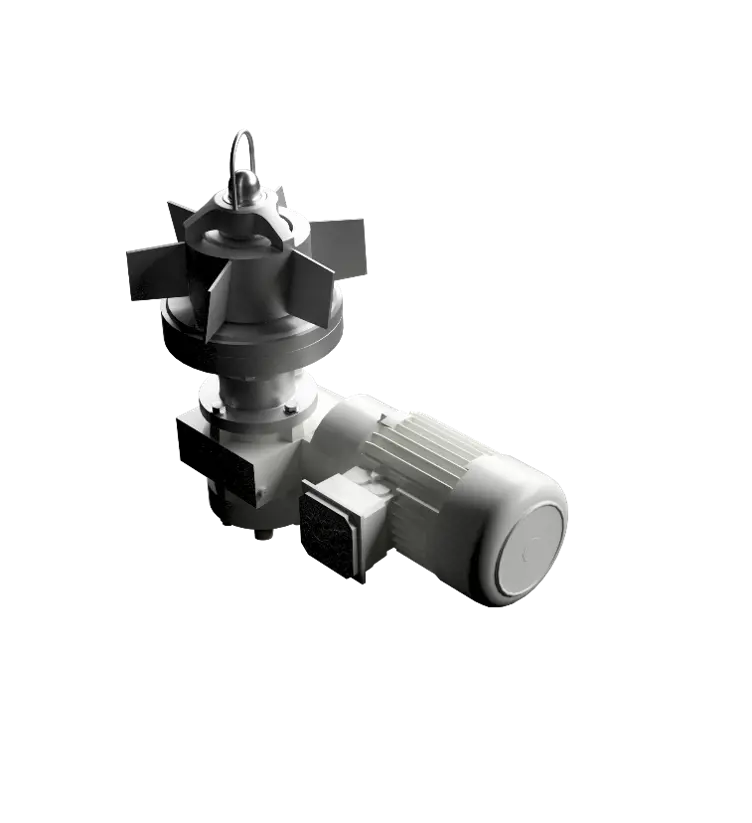
MSB Agitator
Bottom-Mounted Magnetic Drive Magna-Safe®
Technical characteristics
- Pressure (bar): -1 to 10

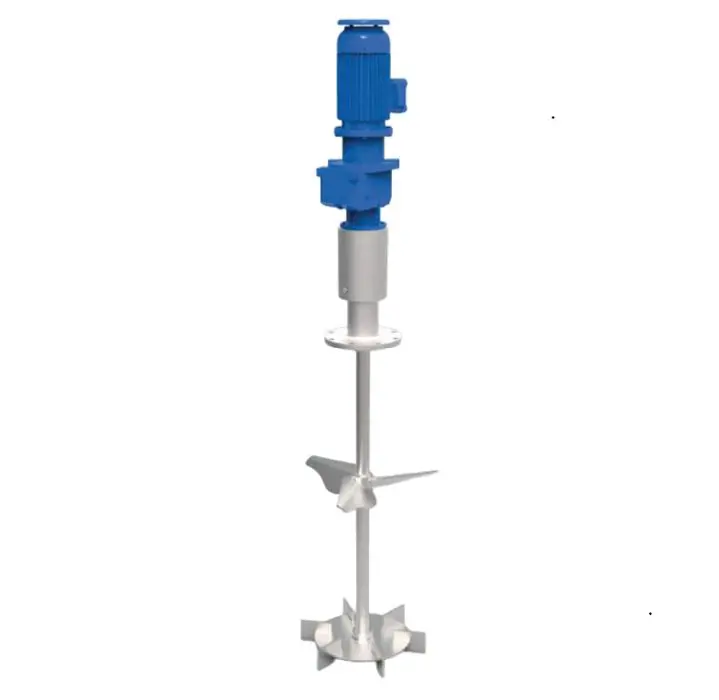
MST Agitator
Top-Mounted Vertical Magnetic Drive
Technical characteristics
- Power: 0,25 kW – 15 kW
- Pressure (bar): 0 to 70
Areas of application


Latest News
Read the other news

F.A.Q.
Interpump is a large multinational group
*Data refer to year 2025